
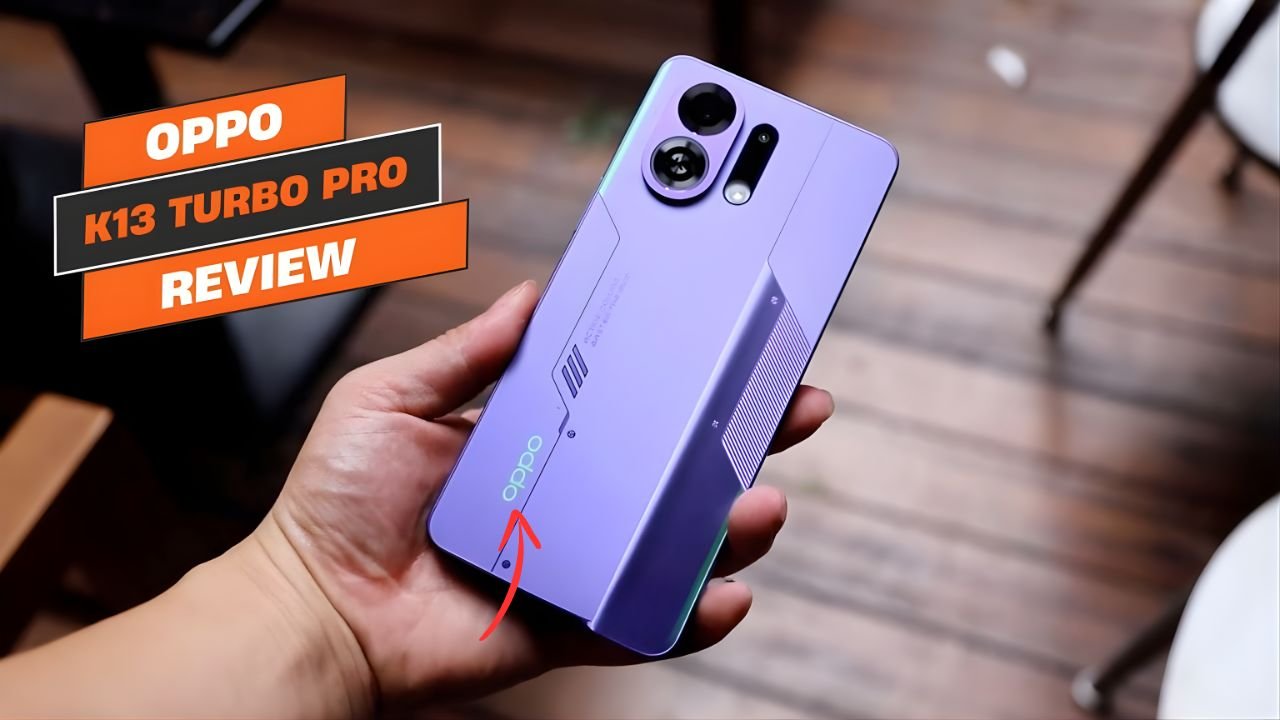
Oppo K13 Turbo 5G : Oppo K13 Turbo 5G packs flagship-level muscle into a mid-range shell, driven by the cutting-edge MediaTek Dimensity 8450 chipset and a massive 7000mAh battery that laughs off heavy usage.
Launched in mid-2025, this beast targets gamers, multitaskers, and everyday power users who demand smooth 5G performance without breaking the bank, starting at around ₹25,000 for the base model. Its sleek design and IPX8/IPX9 water resistance make it a standout in India’s crowded sub-₹30,000 segment.
Striking Display and Build
The 6.8-inch AMOLED panel steals the show with 120Hz refresh, 1B colors, and a peak brightness of 1600 nits that cuts through direct sunlight like a knife—perfect for outdoor scrolling or PUBG sessions in blazing heat.
Resolution hits 1280 x 2800 pixels at 453ppi, delivering crisp visuals with slim bezels and an 89.8% screen-to-body ratio that feels immersive without the notch drama of older Oppo phones.
At 162.8 x 77.2 x 7.3mm and 207g, it slips comfortably into pockets, with options in Purple Phantom, Midnight Maverick, or White Knight finishes that resist fingerprints better than glossy rivals.
Gorilla Glass-like protection up front pairs with a metal frame and the built-in cooling fan to keep thermals in check during marathon gaming, while dual Nano-SIM support caters to those juggling work and personal lines.
Blazing Performance Core
MediaTek’s Dimensity 8450 on a 4nm process powers an octa-core CPU (1x Cortex-A725 at 3.25GHz + performance/efficiency cores) alongside Mali-G720 MC7 GPU, handling AnTuTu scores north of 1.2 million without breaking a sweat.
RAM options from 8GB to 16GB (with virtual expansion) and UFS 3.1 storage up to 512GB mean apps launch instantly, and 20+ tabs in Chrome won’t stutter—ideal for students juggling online classes or creators editing 4K clips on the fly.
ColorOS 15 on Android 15 brings AI tweaks like smart sidebar multitasking and game turbo mode, plus three years of OS upgrades promised for longevity in a market where software support often lags.
The under-display optical fingerprint scanner unlocks in milliseconds, backed by face unlock for quick access, making it snappier than many Snapdragon 7-series competitors at this price.
Camera Setup for Real Life
Main 50MP wide-angle shooter (f/1.8, PDAF) captures sharp daylight shots with natural colors and decent dynamic range, punching above its spec sheet for social media portraits or food reels.
Paired with a 2MP depth sensor for portrait bokeh, it nails edge detection better than basic dual cams, while 4K@60fps video stabilization keeps footage steady for vlogs or family events.
The 16MP selfie cam (f/2.4) delivers vibrant, skin-smoothing shots with 1080p video, though low-light performance leans on Night mode AI rather than hardware wizardry.
Features like LED flash, HDR, and panorama round out a practical package—not Pixel-level computational magic, but reliable for India’s diverse lighting, from bustling markets to evening chai stalls.
Battery Endurance Champion
That 7000mAh silicon-carbon battery is the real hero, easily stretching to two full days of mixed use (social media, streaming, calls) or 10+ hours of screen-on gaming at 120Hz.
80W SUPERVOOC charges it from 0-100% in under 40 minutes, with 13.5W PD, 44W UFCS, and 33W PPS reverse charging turning it into a power bank for earbuds or smartwatches.
No wireless charging keeps costs down, but efficiency shines in real tests—far outlasting 5000mAh rivals like the Poco X7 or iQOO Z9 Turbo during extended YouTube binges or GPS navigation.
Standby drain stays minimal overnight, a boon for commuters relying on it as their daily driver in power-outage-prone areas.
Connectivity and Extra Smarts
5G bands cover all major Indian networks (SA/NSA on n1/3/5/8/etc.), with Wi-Fi 6, Bluetooth 5.4 (aptX HD, LHDC 5), and NFC for quick payments—plus an IR blaster to control your TV or AC like a remote.
Stereo speakers pump loud, bassy audio without a headphone jack (USB-C adapter needed for wired fans), and sensors like gyro, proximity, and compass enable AR gaming or precise fitness tracking.
IPX8/IPX9 rating shrugs off high-pressure water jets or 2m submersion, making it tougher than most in this bracket for monsoon rides or accidental splashes—rarer than MIL-STD-810H but genuinely useful.
No FM radio or microSD slot stings slightly, but cloud storage integrations fill the gap for media hoarders.
Pricing and Value Play Oppo K13 Turbo 5G
Variants kick off at ₹25,355 for 8GB/128GB, scaling to ₹30,000-ish for 16GB/512GB, undercutting similar-spec phones from Vivo or Motorola while matching their punch. Bank offers and no-cost EMI sweeten the deal on Flipkart or Oppo stores, with solid two-year warranty coverage across India.
In a segment flooded with rebranded chips, the K13 Turbo’s unique cooling fan and battery edge give it staying power, appealing to budget gamers over camera chasers.
Also Read this – Kawasaki Vulcan S come with Stylish look – Dhansu design with 56 Kmpl mileage
Oppo K13 Turbo 5G redefines value in the ₹25k zone, blending endurance, speed, and durability into a phone that handles India’s chaotic digital life with ease.
It’s not perfect—no telephoto or wireless perks—but for raw usability, it crushes expectations and sets a new benchmark for affordable flagships.